



![[Bulk buying set] Panasonic LAMDASH shaver cleaning charger dedicated cleaning agents -6 pieces- (japan import) by Panasonic](https://xampda.com/wp-content/uploads/2025/10/bulk-buying-set-panasonic-lamdash-shaver-cleaning-charger-dedicated-600x430.jpg)








-
 Standard delivery
-
Express delivery
-
 Warranty 6 months
Standard delivery
Express delivery
Warranty 6 months
No account yet?
Create an Account![[Bulk buying set] Panasonic LAMDASH shaver cleaning charger dedicated cleaning agents -6 pieces- (japan import) by Panasonic](https://xampda.com/wp-content/uploads/2025/10/bulk-buying-set-panasonic-lamdash-shaver-cleaning-charger-dedicated.jpg)

 Power Bank
 Mouse
Mouse
Squirrel –
El zoom digital es fantástico
El vídeo y audio que graba es de excelente calidad
En si la línea lumix de Panasonic es muy buena para fotos caseras y una buena opción para dar los primeros pasos al mundo de la fotografía sin necesidad de hacer fuertes inversiones. La recomiendo mucho para los viajes y tomas casuales con familia y amigos.
Squirrel –
Produto foi entregue conforme as descrições e chegou antes do prazo estimado.
Christopher S. Cornette –
Sale excelente, buenas tomas y muy funcional
John Ramirez –
The media could not be loaded.
Small, light & easy to carry around when travelling. Zoom range is sufficient for bird & animal video/photo.
JerryInLodi –
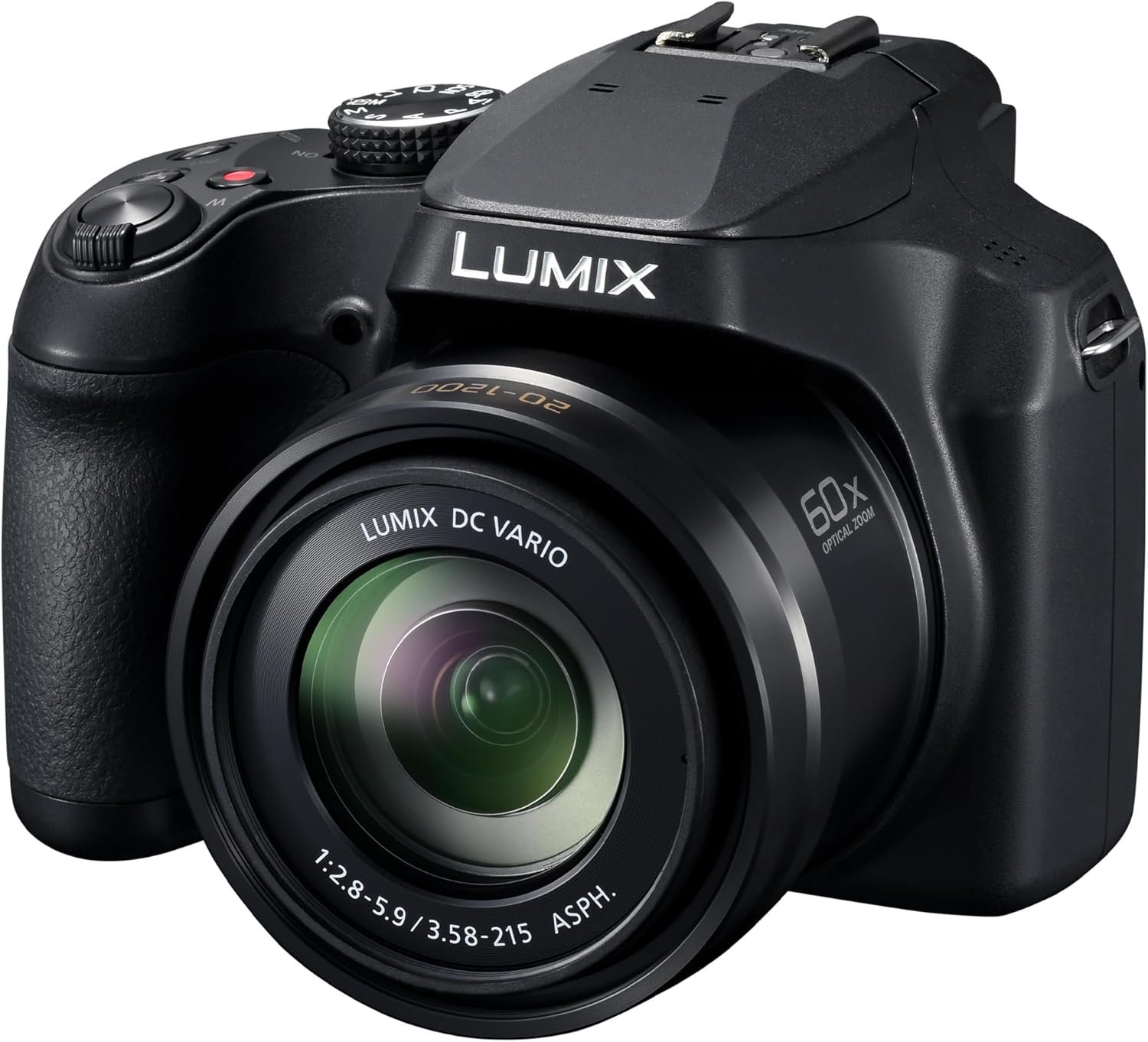
This is a GREAT camera FOR ITS INTENDED PURPOSE. Please read before buying.
This camera is a “superzoom bridge” camera. That means it has a small sensor (it’s physically impossible to get this much zoom out of any portable camera with a large sensor). So, it is NOT a professional grade large sensor camera to get the best depth of color and pin sharp detail. BUT, it IS fantastic to take traveling or hiking to get ALL the shots you cannot get with your phone.
Your phone is amazing at wide landscapes, panorama vistas, portraits, low light, etc. HOWEVER, your phone SUCKS at natural looking macro shots (close ups of small things) and it REALLY sucks at long zoom shots – that wildlife off in the distance for example.
This camera does a great job of taking the pictures your phone simply can’t. It takes really good macro shots – like really good. Not expensive DSLR or mirrorless quality, but pretty close. AND this camera has lots (tons!!!) of OPTICAL zoom and high enough resolution that you can still crop to zoom in even a bit further and still have very solid resolution and quality (though not professional level by any means).
Superzoom bridge cameras are, in my opinion, the best travel companion to your phone when you really need long zoom reach. And I believe this one is the best option for many people. It is cheaper, lighter, and smaller than the competition that can compete for image quality.
Problems with (ALL) superzoom cameras:
They SUCK in low light especially when zooming in – don’t bother, get out your phone instead – it’s great in low light. Once you get into twilight this camera will be mostly useless – but so will all similar cameras.
They are a niche tool. Consider carefully whether you really need this amount of zoom. You can find 20X or even 30X large sensor compact cameras that will get better image quality and be even more portable, and 20x is still quite a bit of zoom, plenty for most uses.
Problems with (THIS) superzoom:
The physical and digital interface is not intuitive. You will need to spend some time learning how to use this.
Having to push a button to switch from viewfinder to LCD screen is annoying (but not a big deal really).
Taking any control over ISO, shutter speed, aperture, etc is a bit wonky.
It also lacks some bells and whistles like wifi connectivity.
Great things about (ALL good) superzoom cameras:
Optical zoom is the ONLY good kind of zoom. Digital zoom is just cropping down your picture and losing resolution. It has its uses, but it’s better to just do it in the computer when you’ll have more control. These cameras have TONS of optical zoom in a small package, making it possible to get shots that are simply impossible with anything else you can afford or carry around – to give you an idea, the Canon 1200mm zoom costs about $20,000 and weighs a “surprisingly light” 7.4 lbs and is 21 inches long. This camera will get you the same distance optically at 1/50 the price of just the lens, less than 1/5 the weight of just the lens, and at a size you can pop in a purse or day pack.
Good things about (THIS) superzoom:
It is cheaper by far than all other options that get this kind of quality. Half the price or less of the Nikons that are only marginally better.
It is smaller and lighter than the competition. The Nikons are nearly twice as long when turned off (lens retracted fully). They also weigh about twice as much (the Nikon P1100 weighs 3.1 lbs compared to this camera at 1.4 lbs). Weight and size really make a big difference in a travel/hiking camera.
The Image Stabilization on this one is as good as it gets in a superzoom, which REALLY REALLY matters when zooming. I’ve managed to get very acceptably sharp photos at 1200 mm (full zoom) while handheld with NO support. That is incredibly impressive. You’ll need good technique – holding the camera properly, watching your breathing, and pressing the shutter without jiggling the camera body.
To sum up, if you have been frustrated with the limitations of your phone when traveling, hiking, etc. and want something that can get all those pictures your phone simply can’t without having to carry around a dedicated camera bag, this is a FANTASTIC option – especially when out in nature to capture the wildlife that can often be very far off in the distance.
If you don’t really need all this zoom, then maybe look at some of the more compact large sensor options that still have good zoom and can do good macro shots.
If you have lots of spare money, and want the maximum possible zoom, and don’t care about carrying a larger heavier camera, then consider the Nikon P1100.
But for the sweet spot of those who need the zoom that goes well past 20 or 30x, and want the most compact lightweight option, or people who have a budget to stay inside, this is the best option on the market, in my opinion.
I’m a backpacker who is also a photography enthusiast, and after doing tons of comparisons and research, this is the camera I choose to carry on the trail because it solves all the problems I had with every other option.
I’m giving it 4 stars out of 5 only because of the lack of wifi and the less than intuitive interface. Otherwise, I think this is a perfect camera for my needs.
Rafael Gonzalez –
El zoom es simplemente impresionante y la calidad de foto y video es exelente ya incluye un flash aunque se le puede colocar otro extra
Anthony M. –
I’ve been so happy with this camera. it takes great pictures no taking lenses on and off. I did add some accessories to it and I Hood a lens hood a strap and add a few extra batteries.
JerryInLodi –
I’ve only had the camera for three days. I have to admit that the selection and menu choices were overwhelming at first, even with some familiarity with cameras. Panasonic has some features unique to its brand and learning the terminology took some time. Rather than read the online manuals, I watched some of the tutorials available on You-Tube. I found 16 dedicated videos by Graham Houghton on the use of the camera. I’m about a quarter of the way through. The claims that the camera doesn’t perform in various conditions just don’t seem to hold any weight when one learns how to operate the camera properly, especially the claim that it performs poorly in low light. I took the camera to the hockey rink and shot in the lighting available in sports mode and was able to capture some great shots. I played around operating the camera in different modes outdoors and shot a hummingbird in flight at 1/8000 of a second, freezing the bird’s wings in flight. Admittedly, the lighting was not in my favor from my vantage point but it was just a camera test, not an attempt at a prize winning photo. I took numerous photos of the same dahlias in different modes and ended up with a series of totally different interpretations of the same image.
I also operated the camera at low light, using the setting recommended in the videos. The results were outstanding. I’ve yet to explore many of the camera’s other features such as post focusing and operating the camera remotely with my android cell phone.
I shot over 330 images at the hockey game and still had half battery life left according to the display. I have not tried the camera in movie mode since I seldom shoot video. From what I’ve experienced so far, I believe my photos will well exceed my current exposures. I’ve barely learned the basics of the camera’s capabilities.
With the huge amount of creative control, this is not a camera you can set down and then pick up a month later and remember how to operate all of its features. And even then, a quick review of the camera’s manuals or the videos may be necessary if all of the camera’s potential is to be used.
While some camera fanatics may complain about the camera’s sensor size or some indistinguishable lens aberration due to the camera’s long lens, let’s face it, most of us will never have our photos printed as wallpaper murals. We view our creations on our cell phones, tablets, laptops, and TVs. The images created by this camera can be as stunning as any full SLR with thousand dollar lenses and are limited only by the shooters capabilities, not by the camera’s limitations.
A nice feature that many bridge cameras do not have is a threaded front on the lend for filters. The shooter can add a polarizing filter or ND filters to extend shutter times to take specialty photos.
If I had one negative thing to say, I would have appreciated a tilt screen since, when traveling and standing in crowds, it is sometimes helpful to hold the camera over everyone’s heads and shoot down at a high angle, using the tilt screen to focus. I can live without that one feature given all of the other features of this incredible camera.
Ho Ah San –
If you are a beginner photographer and looking for a bridge camera, you might immediately think of brands like Nikon and Canon, which have stood the test of time. While I too was inclined toward these brands, I also wanted a camera that packed a decent zoom just to give me that extra bit of flexibility without having to pack several lenses when travelling.
Having used this camera extensively for around 6 weeks in a variety of lighting conditions, in cities and in the country, I can say that it does not disappoint. The build quality feels solid and it can easily be carried around for a few hours without too much effort.
The Intelligent Auto + (iA+), which the camera is set to by default, does a good job at recognizing particular scene types and adjusting the exposure accordingly. In this mode, you still have control of a number of parameters, including exposure value compensation ( which effectively changes the aperture) and white balance. Image stabilization is smooth even at the longer end of the telephoto range, providing you use the electronic viewfinder and cradle the lens barrel as you take the shot. Telephoto image quality can be improved considerably with the use of a tripod. The lens itself extends and retracts quickly and smoothly, while autofocus easily finds the subject. You can also select the focus point yourself using the touchscreen if you are not satisfied.
There are times, for example in low light conditions or indoors, where the camera may select the wrong scene type and completely muck up the exposure. In these cases I would select either Program Auto or Manual modes to get more control over shutter speed and aperture. Bearing in mind the small sensor, the camera’s handheld performance in low light is passable. If you anticipate doing a decent amount of low light photography, I would suggest buying a cheap but stable tripod and using Manual modes to adjust exposure. Just remember to turn image stabilization off to prevent unwanted artifacts smearing the image.
Those looking for creative control over depth of field similar to what a DSLR can offer will be disappointed. This is not a fixed aperture lens. The camera’s aperture range at 20mm EFL is F/2.8- F8, but at 100mm is only F/5.9 to F8. this makes it hard to achieve shallow depth of field at the lower focal lengths, although it is still possible at longer focal lengths providing you use a smaller aperture such as F/2.8 or F4 and correspondingly faster shutter speeds. Having said that, depth of field at the wide angle setting does not change significantly between F/4 and F8. I would argue that F/4 is a better setting for landscapes as you get less softening of the image.
You can see some of the images below this review which I have taken using this camera. The resolution, sharpness and detail are more than adequate for the amateur enthusiast. One great feature is the built-in WiFi, which makes transferring images to your smartphone a doddle.
One of the great strengths of this camera is the 4K video, which is not generally found at this price range. While 4K only shoots for 15 minutes at a time due to the risk of overheating, you can still shoot in 1080p for as long as you want.
In conclusion, this is a great camera for this price and can easily adapt to any situation and help you build your photography skills for years to come. Would I buy it again? Absolutely.